
Showing 1–6 of 26 resultsSorted by latest
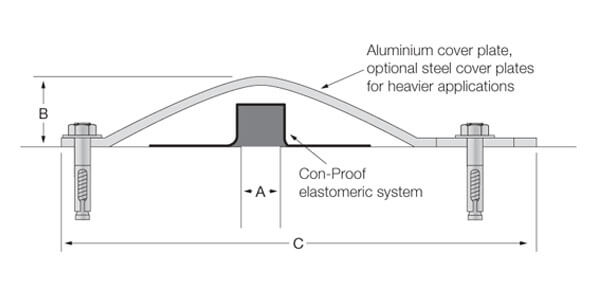
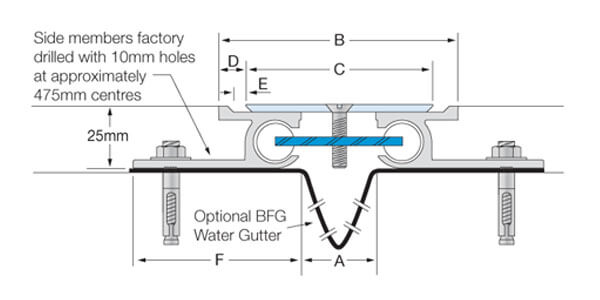
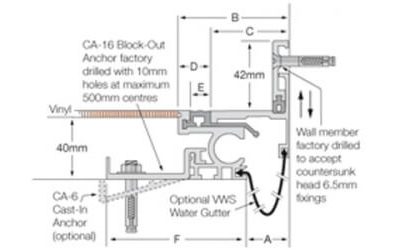
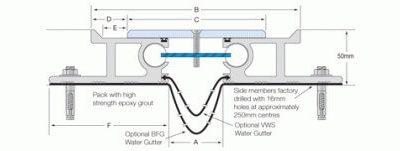
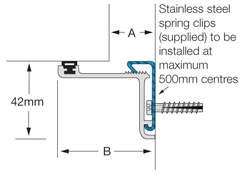
Every commercial structure moves. Concrete shrinks and expands with temperature, floors settle at different rates either side of a structural break, and seismic and wind loads flex a building’s frame over its lifetime. An expansion joint cover is what lets that movement happen safely, without cracking tiles, tearing waterproofing, or leaving a trip hazard where two slabs meet. Get the wrong system in the wrong location and the joint either fails under load or fights the structure it is meant to protect.
The detail specifiers get wrong most often is not the product, it is the location: drawing a control joint where an expansion joint belongs, or the reverse. A control joint manages shrinkage within a single pour and needs no cover system rated for structural movement. An expansion joint sits across a genuine structural break, isolates two independent sections of a building, and needs a cover rated for the actual movement capacity of that break, in millimetres, not a generic aesthetic strip. We map this distinction against your structural drawings before the joint is built, not after a crack tells you it was wrong.
Applications by property type
Our range covers floor, wall and ceiling conditions in aluminium, stainless steel or solid brass construction, sized to the movement capacity and load class your project carries:
- Shopping malls and retail podiums: floor joints across expansion breaks in tiled or stone-finished common areas, sized for pedestrian and light-trolley loading, with a finish that sits flush and does not become its own trip hazard.
- MRT, LRT and transit structures: heavy-duty, higher-movement-capacity systems across structural breaks in station concourses and platforms, built to hold up under continuous public foot traffic and rail-induced vibration.
- Hospitals and institutional buildings: stainless steel covers, specified over aluminium for a reason that matters in a clinical setting. A stainless surface is non-porous and withstands rigorous, repeated sterilisation in high-temperature autoclaves without degrading, where aluminium is softer and prone to scratching, and a scratched surface is a surface that harbours what it is supposed to shed.
- Airports and large-span terminals: wide-capacity systems for the long structural bays typical of terminal buildings, where movement tolerances are larger and joint failure is highly visible.
- Car parks and ramps: car-joint series rated for wheel loading, with a low profile that does not catch a tyre or a wheelchair caster.
Fire compartmentation: where the joint cover has to carry the rating too
Fire is the other detail worth settling early, and it is one where the requirement is narrower than people assume. There is generally no “fire-rated floor” requirement on Malaysian projects. What does apply is this: where an expansion joint crosses a fire-rated wall, the joint assembly itself has to carry that fire rating, not just the wall around it. A fire-rated wall with an unrated joint cover running through it has a hole in its compartmentation, and the joint is where the hole is.
This is a solved problem, and we can show our working. Latham Fire Rated Systems (barriers) are designed to be used in conjunction with the Latham flexible mechanical expansion joint covers we supply, and are available in 2 and 4 hour fire ratings for joint widths from 50mm to 1200mm. Depending on the system and the site requirements, Latham purpose-manufactures these barriers to pass some or all of the following classifications:
- ASTM E1966, Fire Test for Fire-Resistive Joint Systems
- UL 2079, Fire Tests of Fire Resistive Joint Systems
- ASTM E119, Fire Test for Building Construction and Materials
- ASTM E1399, Standard Test Method of Cyclic Movement and Measuring the Minimum and Maximum Joint Widths of Architectural Joint Systems
- Australian Standard AS1530 Part 4, Methods for fire tests on building materials, components and structures
Testing and classification is carried out by one or more independent authorities including Underwriters Laboratories, Omega Point Laboratories, Warnock Hersey International, and the California State Fire Marshal. Latham states the barriers are fabricated from inorganic materials and are incombustible, so they do not create smoke or contribute fuel during a fire. The barriers work with most floor, floor-to-wall, wall, roof, roof-to-parapet and ceiling conditions, and in shaft wall, curtain wall and chase wall applications.
Two honest caveats, because you are the one carrying this on your drawings. These are international standards, not Malaysian ones, and they are Latham’s test programme, not ours. What we do with them is the part that helps you: tell us your compartmentation strategy and we will confirm in writing which system meets it, before the wall is built rather than after a fire officer asks.
Working from your bill of quantities
Most of our expansion joint enquiries arrive as a line item already sitting in a bill of quantities, sized against a generic aluminium strip rather than a movement-rated system. If a quantity surveyor or contractor proposes a substitution to save cost, ask us for a like-for-like comparison against your specified series before it is approved. We will set out the movement-capacity gap and the practical consequence, cracked tiles, torn waterproofing, a joint that opens visibly under load, in a form you can forward straight into the cost meeting, rather than having to make the technical case yourself.
Where the project programme is tight, tell us the structural completion date early. Core sizes across the range are held in local stock, and committing to a series before detailing is finalised is usually what protects the install date, not what delays it.
Browse the expansion joint cover range above for full specifications on each series, and use the Request a Quote button on the specific product page you need.
Frequently Asked Questions
What is the difference between an expansion joint and a control joint?
A control joint manages shrinkage cracking within a single continuous concrete pour and does not need a movement-rated cover system. An expansion joint sits across a genuine structural break between independent sections of a building and needs a cover rated for that break's actual movement capacity. Using the wrong one in the wrong location is the most common specification error we are asked to correct.
How do I know what movement capacity my project needs?
Movement capacity comes from your structural engineer's calculations for the specific joint location, covering thermal movement, seismic allowance and settlement. Send us the detail and the movement data and we will confirm which series in our range meets it.
Does an expansion joint cover need to be fire rated?
Where the joint crosses a fire-rated wall, yes. The joint assembly has to carry the rating too, otherwise the compartmentation has a gap exactly where the joint runs through it. There is generally no separate fire-rated floor requirement on Malaysian projects. Latham Fire Rated Systems are available in 2 and 4 hour ratings for joint widths from 50mm to 1200mm, and depending on the system and site requirements are manufactured to pass some or all of ASTM E1966, UL 2079, ASTM E119, ASTM E1399 and AS1530 Part 4, as tested and classified by independent authorities including Underwriters Laboratories and Warnock Hersey International. These are international standards rather than Malaysian ones. Send us your compartmentation strategy and we will confirm in writing which system meets it.
What materials are available, and how do I choose between them?
Aluminium, stainless steel, and solid brass. Often the choice is an architectural and environmental one, covering finish, corrosion exposure and cleaning regime, rather than a structural one. Sometimes it is not a preference at all: in hospitals and other settings with repeated high-temperature sterilisation, stainless steel is the specification, because its non-porous surface holds up to autoclave cycles where softer aluminium scratches. Tell us the environment and we will tell you which of those two situations you are in.
Do you hold stock in Malaysia, or are these imported per order?
Core sizes are held in local stock for faster Klang Valley delivery. Tell us your programme date early and we will confirm what can be committed against it.