
Showing all 4 resultsSorted by latest
The main entrance is understood in facility management practice as the single largest point of dirt, dust, and moisture entry into a commercial building, and every square metre that gets past the door becomes a maintenance cost, a slip risk, and a wear cost on the interior finishes behind it. An entrance matting system is the least glamorous line item in a commercial fit-out and one of the highest-return, because it is the one detail that protects everything specified after it, from polished stone lobbies to carpeted office floors.
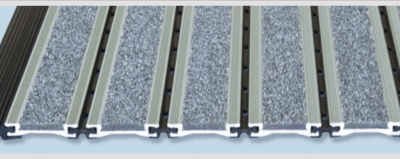
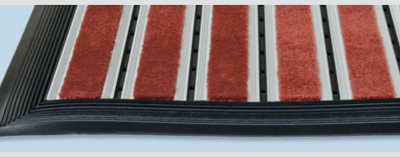
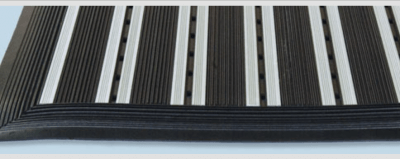
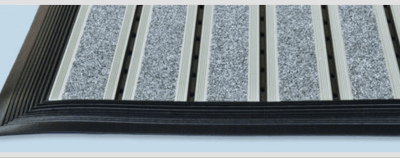
The range splits cleanly, and the model code tells you which is which. Recessed systems all begin with R: RDCC (carpet), RDCV (vinyl) and RSA (Supagrit abrasive). These sit flush with the finished floor and read as a deliberate architectural detail rather than a loose mat. Surface-mounted systems are SDCC, SDCV and SSA, specified where a recess pit is not possible or where a retrofit has to go in without altering the existing floor build-up.
Applications by property type
- Shopping malls and retail podiums: high-capacity recessed matting at every public entrance, sized to the width of pedestrian flow and specified for continuous heavy traffic without becoming a trip hazard itself. Mid Valley Gardens, Pavilion Damansara Heights and Pavilion Kuala Lumpur have all specified Latham entrance mats.
- Office towers and corporate lobbies: recessed systems that integrate into a stone or tile lobby floor without an obvious seam, preserving the architectural finish while doing the functional job. Nine corporate towers at Pavilion Damansara specified RDCC for their lobby entrances.
- Hotels: matting specified for a residential-grade appearance at the porte-cochere and main entrance, where first impressions matter as much as function. EQ Hotel KL runs a 100-foot RSA mat at their main drop-off, the longest run we have supplied.
- Hospitals and institutional buildings: surface or recessed systems specified for infection-control cleanability in addition to dirt and moisture capture. Columbia Asia Cheras, Avisena Shah Alam and SALAM Specialist are among the hospitals we supply.
- MRT, LRT stations and airports: heavy-duty, high-traffic matting at station and terminal entrances, where continuous public volume and weather exposure, rain-wet shoes in particular, make moisture capture a genuine slip-risk control, not a cosmetic one. Our mats are at Damansara Kwasa and Sungai Buloh MRT stations, Kota Kinabalu airport, and Sultan Ismail Petra airport in Kota Bharu.
Recessed or surface-mounted: decide before the slab is poured
The specification decision that matters most here is recessed versus surface-mounted, and it needs to be made at planning stage, not at fit-out. A recess pit has to be built into the structural slab; if it is missed at the concrete stage, the project is locked into a surface-mounted system regardless of the architectural preference. We flag this early with any project team specifying matting, precisely because it is the kind of detail that is expensive and disruptive to correct once the floor is poured.
Entrance matting also intersects with accessibility requirements under MS 1184 where a mat sits within an accessible route: the transition edge has to be flush or ramped, not a lip that catches a wheelchair caster or a cane tip. We specify and confirm which of our systems meet that requirement for accessible entrances.
Sizing is the detail most often specified wrongly, and there is a rule for it
Our rule of thumb is 1.2 metres in the direction of travel, because that is what it takes to ensure both feet land on the mat during a normal walking stride. Anything shorter and a visitor can cross the mat having put only one foot on it, which means half the dirt and moisture you were trying to capture walks straight past onto your finished floor. Width matters, but it is the run length in the direction of travel that does the actual work.
This is the number that gets value-engineered down to the minimum aesthetic footprint at budget review. It looks like a small saving on a drawing. What it actually does is move the cost onto the cleaning and floor-maintenance budget for the life of the building, and put a wet-shoe slip risk in the lobby. If someone proposes shortening the run, ask us for the comparison before it is approved.
Working from your bill of quantities
If matting is currently specified generically on your drawing, send us the entrance width, expected daily footfall, and whether a recess pit is already in the structural design, and we will confirm the correct system, run length, and mounting method before the slab is poured. This is the one category on this list where getting the decision made late, after the concrete stage, permanently forecloses the better-performing option and leaves the project committed to a surface-mounted retrofit regardless of what the architecture actually called for.
Browse the entry mat range above for full specifications on each system, and use the Request a Quote button on the specific product page you need.
Frequently Asked Questions
Should I specify recessed or surface-mounted entrance matting?
Recessed matting sits flush with the finished floor and reads as a deliberate architectural detail, but requires a pit built into the structural slab at planning stage. Our recessed models all begin with R: RDCC (carpet), RDCV (vinyl) and RSA (Supagrit abrasive). Surface-mounted matting, SDCC, SDCV and SSA, can be added later or where a recess is not possible. This decision needs to be made before the slab is poured, and we can advise early if you are not yet committed.
How much matting do I actually need at an entrance?
Our rule of thumb is 1.2 metres in the direction of travel. That is what it takes for both feet to land on the mat during a normal walking stride, which is the point of the mat. A shorter run lets a visitor cross with only one foot making contact, so roughly half the dirt and moisture carries straight onto your finished floor. Tell us the entrance width and expected foot traffic and we will confirm the run length.
Does entrance matting need to meet accessibility requirements?
Where matting sits within an accessible route, MS 1184 requires the transition edge to be flush or ramped so it does not catch a wheelchair caster or cane tip. We confirm which of our systems meet this for accessible entrances.
Can surface-mounted matting be retrofitted into an existing lobby?
Yes, that is precisely the case surface-mounted systems, SDCC, SDCV and SSA, are specified for, where a recess pit was not built in or a floor build-up cannot be altered.
Is this matting suitable for high-traffic public entrances like malls or transit stations?
Yes. Several of our systems are specified for continuous heavy public traffic and weather-driven moisture load, which is the exact condition at mall, station, and terminal entrances.