
Showing 1–6 of 9 resultsSorted by latest
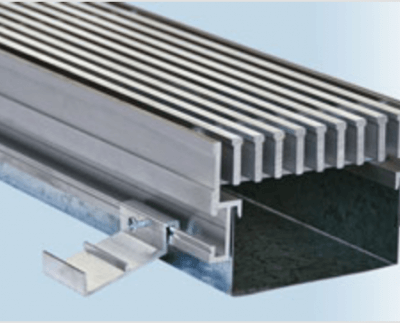
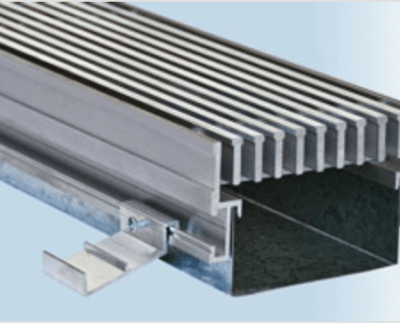
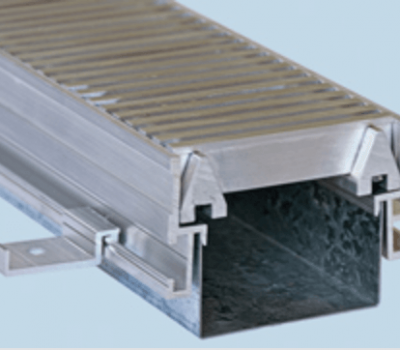
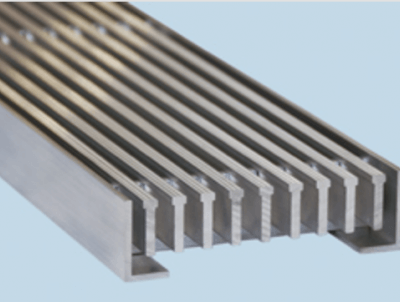
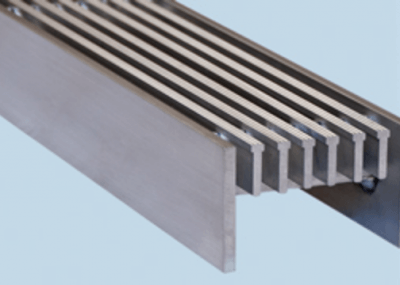
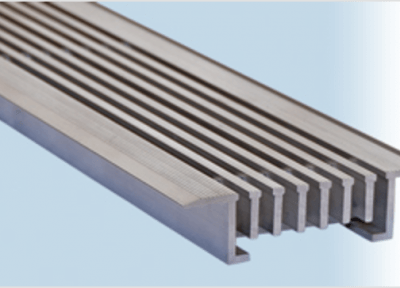
Floor gratings sit at the intersection of three things a specifier has to get right at once: drainage or ventilation performance, slip resistance for anyone walking across it, and load rating for whatever crosses it, from foot traffic to a service trolley to, in some applications, a vehicle wheel. Get any one of those wrong and the grate either fails structurally, floods, or becomes the slip-and-fall incident on an otherwise well-specified floor.
Our Lathamgrate range of serrated aluminium trench grates and frames is built to hold that balance: the serrated profile gives genuine slip resistance underfoot, in wet and dry conditions, while the open area is sized to actually drain or ventilate at the rate your service engineer specified, and the frame and grate are load-rated to the traffic class of the location.
Applications by property type
- Shopping malls and retail podiums: trench drainage at entrances and wet areas such as food courts and wash bays, where slip resistance directly protects the mall operator from liability, and appearance still has to read as a finished commercial floor, not a service grille. Just as important are the public areas people arrive through: car parks, handicapped parking bays, and drop-off areas, where a wheelchair or a stroller is likely to cross the grate and the slot profile has to be safe to roll over. Pavilion Kuala Lumpur uses Lathamgrate at their Boulevard open-air retail area.
- Hospitals and institutional buildings: hygienic aluminium grates in wet areas and plant rooms where corrosion resistance and cleanability matter as much as drainage. Equally, the public areas of a hospital, where a grate has to be crossed safely by strollers, wheelchairs, medical stretchers and beds, and medical carts. A grate that is fine underfoot can still catch a caster or a bed wheel, which is a different specification question and one worth asking early.
- Hotels: bathroom and wet-area grating, our ALBATH series, specified for a residential-grade finish that does not look industrial in a guest-facing space.
- MRT, LRT and transit structures: heavier load-rated grating and frames in platform and concourse drainage runs, built for continuous public traffic and periodic maintenance vehicle access.
- Airports and car parks: larger-format drainage runs and ventilation grates sized for the higher flow rates and vehicle loading typical of these floor plates.
Accessibility is a grating question too
Malaysian Standard and workplace safety references, MS 1184 accessibility provisions and general workplace slip-resistance expectations under Malaysian OSH practice, both bear on grating specification: a grate in a public circulation route has to be crossable safely by someone using a cane, a wheelchair caster, or crutches, which rules out wide-slot or non-slip-rated profiles in those locations. We will confirm which of our series is appropriate for an accessible route versus a plant-room or car-park application, where the requirements differ.
If drainage capacity is the driver, tell us the flow rate your M&E engineer has specified and we will match open area accordingly rather than defaulting to a standard slot size that may under-perform or over-perform for your site.
Frame and finish matter as much as the grate
A grate specified correctly but seated in the wrong frame is a common site problem: an aluminium grate in a mismatched or corroding frame will rock, rattle, or sit proud of the finished floor, which becomes both a maintenance callback and a trip hazard in its own right. We specify grate and frame as a matched system, sized to the actual finished floor build-up, covering screed thickness, waterproofing membrane, and tile or stone thickness, rather than a generic grate dropped into whatever frame happens to be on hand at the time.
Working from your bill of quantities
Gratings are frequently specified generically on drawings, along the lines of “floor grating to match drainage schedule”, and left to the contractor to source at build stage, which is exactly where a slip-rated, correctly load-rated system gets substituted for a cheaper unrated one to save cost. If your drawing currently reads generically, send it to us and we will confirm the correct series, load class, and frame detail before it goes out to tender, so the substitution risk is closed before a contractor has the chance to price a cheaper alternative against it, and before it becomes a defect noted at handover instead.
Browse the Lathamgrate range above for full specifications on each series, and use the Request a Quote button on the specific product page you need.
Frequently Asked Questions
Are your floor grates slip-rated for public pedestrian areas?
Yes. The Lathamgrate serrated profile is designed for slip resistance in wet and dry conditions, which is the requirement for grating in publicly accessible circulation routes, malls, and transit concourses.
What load rating do I need for my application?
Load rating depends on what crosses the grate: pedestrian-only, trolley and service traffic, or vehicle wheel loading in a car park or loading bay. Tell us the traffic type and we will confirm the correct series and frame.
Can floor gratings sit within an accessible, OKU-compliant circulation route?
They can, but the slot profile has to be crossable by a cane, wheelchair caster, or crutch tip without catching, which rules out wide-slot profiles in those locations. The same applies in public areas where strollers, wheelchairs, medical stretchers and beds, or medical carts cross the grate. We will confirm which series is appropriate for an accessible route.
Do you supply gratings for wet areas like hotel bathrooms, not just industrial drainage?
Yes. Our ALBATH series is specified for a residential-grade finish suited to hotel and guest-facing wet areas, distinct from our industrial and transit-grade ranges.
How is drainage capacity matched to my project?
Send us the flow rate from your M and E engineer specification and we will match the open area of the grate accordingly, rather than defaulting to a standard slot size.